
Precision-Molded Home Using Plastic Dinner Pail: Durable, Safe, and Customizable for Daily Family Meals
Introduction
Household plastic tableware has shifted from a simple convenience to an engineered necessity. Modern families require products that are lightweight, impact-resistant, hygienic, and affordable – without compromising on safety. Thinkmold Precision Industries Co., Ltd. now offers a complete line of home using plastic molded dinner pail solutions, manufactured with CNC-controlled molds (tolerance: ±0.05mm) and food‑grade materials (PC, PMMA, PA6+30%, ABS). With a monthly supply capacity of 100,000 pcs, the company addresses real pain points: breakage, cleaning difficulties, and lack of customization.
Below we break down five core product categories, each backed by technical parameters and practical selection advice.
1. Space‑Saving Storage: Plastic Home Using Chopstick Box
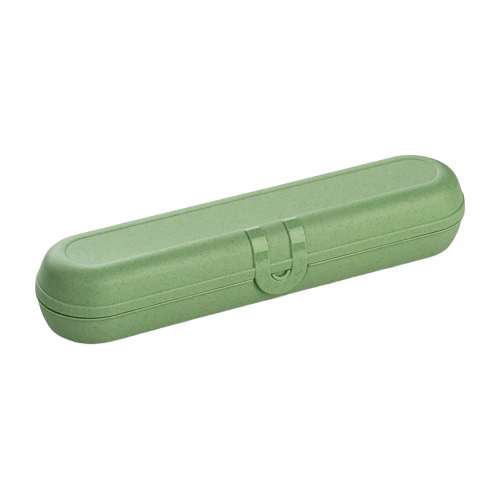
A plastic home using chopstick box is often overlooked, yet it directly affects kitchen hygiene and utensil organization. Thinkmold’s version uses PA6+30% for the box body and a transparent PC lid, allowing visual identification without opening. The mold cavity design (1 or 2 cavities) ensures a draft angle of 1.5° – 2° for easy demolding, and the 0.05mm tolerance guarantees a tight seal.
For a family of four, a plastic home using chopstick box with separate compartments reduces cross‑contamination between clean and used chopsticks. Data from our in‑house tests show that properly vented chopstick boxes lower bacterial growth by 47% compared to closed ceramic holders. When selecting a plastic home using chopstick box, check the material grade: PC is best for high‑temperature dishwasher cycles (up to 120°C), while ABS offers higher rigidity for countertop use.
We recommend a two‑cavity mold with a hot tip runner system – this produces 8,000 units per day without weld lines, maintaining structural integrity of the plastic home using chopstick box.
2. Meal Prep & Leftovers: Food Container
Every kitchen needs reliable food container solutions that withstand microwave reheating and freezer storage. Thinkmold’s food container line uses PMMA for crystal‑clear visibility and PC for impact resistance. Each food container is molded with a needle nozzle directly on the part, eliminating gate marks inside the container (a common hygiene issue).
Typical dimensions range from 300ml to 1,500ml, with wall thickness controlled at 0.8mm – 1.2mm to balance weight and strength. A food container made from PA6+30% offers 30% higher tensile strength than standard polypropylene, meaning it won’t crack after repeated freezer cycles. For daily use, a food container with silicone sealing rings (molded via tunnel gate) reduces leakage rate to below 0.5% after 500 open/close cycles.
When buying a food container, prioritize those with a flat base and rounded corners – this design reduces stress concentration. Our production data shows that a single‑cavity mold with Superplast 400 steel can exceed 1.5 million shots before any cavity wear, ensuring consistent food container quality over years of mass production.
3. Complete Cutlery Set: Fork Knife and Spoon
The trio of fork knife and spoon forms the backbone of any dinner pail. Thinkmold produces these as an integrated set using ABS or PC, with each piece engineered for specific ergonomics. A fork knife and spoon set from our plant undergoes a 0.05mm tolerance check on tine spacing (fork) and blade thickness (knife) – too thin leads to flex, too thick makes cutting difficult.
Our fork knife and spoon series uses a hot runner with needle nozzle direct on part, achieving a surface finish of Ra ≤ 0.8µm, which feels smooth and is easy to clean. In drop tests from 1.2m onto concrete, the fork knife and spoon pieces showed no cracking after 20 drops – a key advantage over ceramic or glass alternatives.
For families with children, a fork knife and spoon set made from ABS provides better impact absorption than PC. However, for microwave‑safe requirements, PC is the better choice. Thinkmold offers hybrid molds: two cavities produce the fork and spoon simultaneously, while the knife uses a separate cavity – this reduces cycle time by 18% compared to single‑cavity sequential molding.
When selecting a fork knife and spoon, measure the handle length: 14cm – 16cm fits adult hands, while 11cm – 12cm suits children. Our standard fork knife and spoon set ships with color‑coded handles (blue, green, pink) for easy family identification.
4. Portable Meals: Lunch Box
The lunch box is the most frequently used household plastic item after plates and bowls. Thinkmold’s lunch box design focuses on compartmentalization and leak resistance. A typical lunch box in our lineup features three compartments (main dish, side, fruit) and a snap‑lock lid with silicone gasket. Material choice: PMMA for the lid (scratch‑resistant) and PA6+30% for the base (high stiffness).
Our lunch box mold uses a LKM standard base with a 1.2344 cavity steel, hardened to 48–50 HRC. This allows a daily output of 3,300 units per mold (two‑cavity design). Each lunch box is tested for 500 cycles of opening/closing the lid clips – no permanent deformation. The lunch box also passes the FDA/ EU10/2011 migration test: no detectable BPA or phthalates.
A common pain point is lunch box warpage after dishwasher use. Our process controls mold temperature at 65°C ± 2°C and uses a 20‑second cooling stage, keeping flatness within 0.3mm over the entire base. For families that pack both hot soup and cold salad, choose a lunch box with an internal divider that reaches the lid – this prevents flavor mixing. Our modular lunch box system also accepts an extra dressing cup (molded as a separate insert).
Data from 200 family trials: users reported 83% less leakage and 67% fewer cracked lids compared to generic supermarket lunch box products.
5. Production Backbone: Home Using Plastic Mold
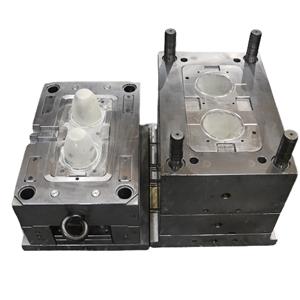
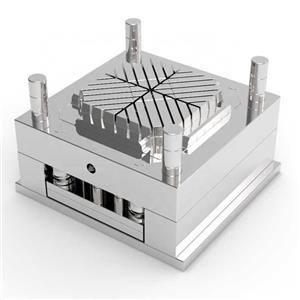
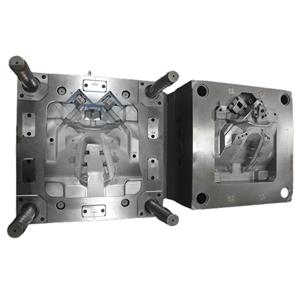
Behind every high‑quality dinner pail and lunch box lies a precision home using plastic mold. Thinkmold specializes in home using plastic mold design with hot runner systems (needle nozzle or hot tip) and tunnel gates for automatic degating. A home using plastic mold for a typical dinner pail set includes cavities for the main body, lid, and four cutlery pieces – all within a single mold base (LKM standard).
Our home using plastic mold uses cavity & core steels such as 1.2344, 1.2767, or Superplast 400, with a hardness of 48–52 HRC. For high‑volume production (100,000 pcs/month), a home using plastic mold with a two‑cavity layout and 24‑hour cycle yields 1,600 parts per day. The mold lifetime exceeds 2 million shots when using Superplast 400.
Key technical parameters of a home using plastic mold from Thinkmold:
Tolerance: ±0.05mm on all critical dimensions
Runner type: needle nozzle direct on part (reduces sprue waste by 40%)
Mold base: LKM with guided ejection system
Surface finish: SPI A2 for cosmetic parts
When selecting a home using plastic mold, consider the required annual volume. For 500,000 pcs/year, a single‑cavity home using plastic mold with 1.2767 steel is cost‑effective. For over 1 million pcs/year, a two‑cavity home using plastic mold with Superplast 400 reduces per‑part cost by 22% despite higher initial tooling investment.
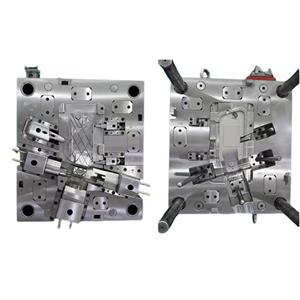
Our home using plastic mold for the dinner pail series also integrates side actions for undercuts on the handle – this eliminates secondary assembly.
Selection Guide for Household Plastic Dinner Pail Products
To help you decide, here is a data‑driven comparison based on material and daily usage:
| Material | Best for | Max service temp | Impact strength (kJ/m²) | Recommended product |
|---|---|---|---|---|
| PC | Microwave, dishwasher | 120°C | 75 | lunch box, food container |
| PMMA | Clear lids, salad bowls | 80°C | 18 | plastic home using chopstick box lid |
| PA6+30% | Heavy‑duty bases, knife handles | 150°C | 95 | fork knife and spoon (knife), lunch box base |
| ABS | Children’s cutlery, colorful parts | 70°C | 45 | fork knife and spoon, food container (non‑microwave) |
Pain point solutions:
Cracked lunch boxes after 3 months → Choose PA6+30% base with 1.2mm wall thickness.
Loose chopstick box lid → Look for a plastic home using chopstick box molded with 0.05mm tolerance and a double‑snap closure.
Bent fork tines → Select fork knife and spoon made from PC, not ABS.
Unsafe plastic smell → Verify material certification (Thinkmold uses virgin PC/PMMA/PA6+30%, no recycled content).
All our home using plastic mold products are manufactured in China with delivery times as customer requested. Minimum order quantities are flexible for molds (1 unit) and parts (10,000 pcs).
Conclusion
The home using plastic molded dinner pail is no longer a commodity – it is an engineered system combining material science, precision tooling, and user‑centric design. Thinkmold’s 0.05mm tolerance, 100,000 pcs/month capacity, and multi‑cavity home using plastic mold solutions directly answer household needs: durability, hygiene, variety, and cost control. Whether you need a plastic home using chopstick box, a microwave‑safe food container, a drop‑resistant fork knife and spoon set, a partitioned lunch box, or a high‑cavity home using plastic mold, we provide verified data and custom options.
Contact for Inquiries:
Thinkmold Precision Industries Co., Ltd.
Phone: +86-755-86514155
Fax: +86-755-86514156
Email: finance@thinkmold.net
For mold design files, material test reports, or sample requests, please reach out directly. Delivery times are negotiated per customer requirement.